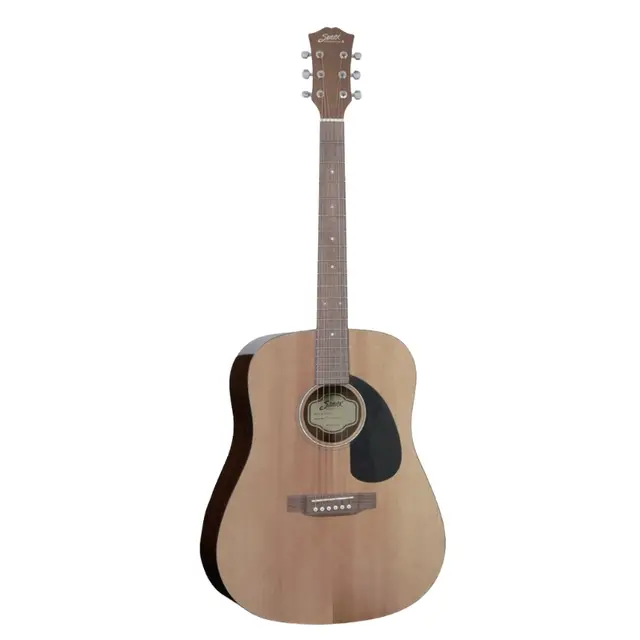
An acoustic guitar must work at the volume and playing position you use most. Begin with a short list of songs and techniques, then compare instruments using the same passages. A louder demonstration is not automatically a more useful instrument for your room.
1. Decide on the playing tradition
Nylon string classical guitars and steel string acoustics are built for different playing approaches and string loads. Their neck dimensions and feel often differ as well. Choose the instrument type that supports your lessons and repertoire. Do not fit steel strings to a guitar designed only for nylon strings. If you want fingerstyle, accompaniment and occasional strumming, explain that combination clearly when asking for a recommendation.
2. Fit the body before comparing decoration
Sit in your normal practice chair and check whether your picking arm can rest naturally over the guitar. A deeper or wider body may feel awkward even when the neck is comfortable. Try quiet fingerpicked notes, open chords and a firm strum. Listen for a balance that suits your role: clear accompaniment, an audible melody, or a fuller solo sound. Record a short comparison from the same position when the shop permits it.
3. Read construction terms carefully
A listing that says solid top does not necessarily describe solid back and sides. Ask for the construction of each major part and the maker’s care instructions. Material names provide context, but they do not establish the quality of an individual setup or guarantee a preferred tone. Inspect the bridge area, neck joint and finish for condition issues. Confirm that the strings can be pressed comfortably and that the instrument plays cleanly across the frets.
4. Budget for use beyond the first day
Built-in electronics are useful when you need stage amplification, but they are optional for ordinary unplugged practice. If a pickup is included, test its controls and output, and ask about the power source. Include a protective case, tuner, replacement strings and any required setup in your budget. Consider where the guitar will be stored and how you will monitor humidity. Keep the written specifications and condition photographs with your purchase records.
Technical references: Yamaha, Choosing an Acoustic Guitar; Yamaha, Classical Guitar Musical Instrument Guide; Yamaha, Basic Acoustic Guitar Care.
Product information: MojoZone Editorial
Community
The conversation
Contributions appear after moderation. Share your own experience and keep personal contact details private.