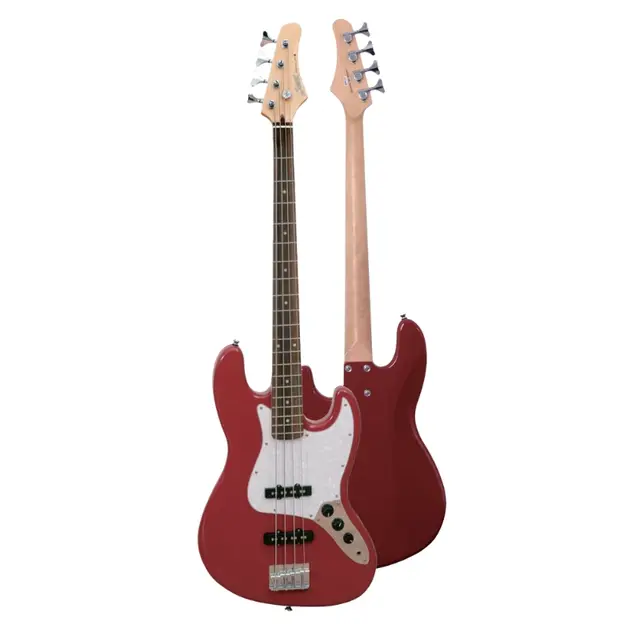
The right bass supports the lines you want to play and remains comfortable for a full rehearsal. Start with the lowest notes required by your music. Then assess the instrument’s neck, balance and controls instead of treating an extra string as an automatic upgrade.
1. Choose the range you will actually use
A conventional five string bass usually adds a low B below the familiar E, A, D and G arrangement. That extra range can help with particular repertoire and reduce some position changes. It also adds another string to control and mute. Play a simple line on both formats, including rests, to hear unwanted ringing. A four string remains a practical choice when it covers the music and feels easier to manage.
2. Compare reach and spacing together
Scale length, neck profile and string spacing all affect the experience. Many familiar basses use a 34-inch scale, while shorter and longer designs also exist. Do not choose by that number alone. Try the first position, reach the lowest string and cross strings with your usual picking technique. Check how the bass hangs on a strap: repeatedly supporting a falling neck with your fretting hand can make a rehearsal tiring.
3. Test the electronics with neutral settings
Begin with a straightforward amplifier sound and compare instruments at similar loudness. Listen to the lowest string, the middle register and sustained notes higher up the neck. Operate each control and listen for interruptions or unwanted noise. If the instrument has active electronics, confirm how its battery is accessed and whether it can still operate with a depleted battery. These details matter more than the number of tone controls.
4. Check ownership and replacement costs
Confirm the correct replacement string specification before ordering spares. The distance from the string’s ball end to its taper can matter, especially with through-body stringing, so a scale label alone may be insufficient. Include a suitable bass amplification or headphone solution, a supportive strap and a case. Ask about the setup, fret condition and return terms. Keep a brief comparison sheet so finish and brand familiarity do not replace your original playing requirements.
Technical references: Fender, Bass Guitar Buying Guide; Yamaha, Four-String or Five-String Bass; D’Addario, Bass String Scale Lengths.
Product information: MojoZone Editorial
Community
The conversation
Contributions appear after moderation. Share your own experience and keep personal contact details private.